
Showing posts with label Kumbh Mela. Show all posts
Showing posts with label Kumbh Mela. Show all posts
The priests is being hurt by the Moral and economic blame. The general population is low in reverence of saints, the problem is more in Akhara. So the council of Akhara parishad start individual inquiry of the concerned people who is going to take relinquishment. The moral, social and knowledge will be tested, it will live up to her retirement to his life. For those who have expressed their desire to retire in Kumbh 2013 investigation has just begun. Radhe Ma Mahamandleshwar issue is hurting enough to Council of Akhara Parishad. Many saint already have reached the dignity of his retirement from wrong actions. According to Swami Hari Chatany Brahmchari, anyone can take the relinquishment, but that everyone should follow the prescribed procedure. The spokesman of Council of Akhara Parishad Mahant Durgadas says, We will strictly follow the process it now, to relinquishment at the meet.

Will Examine The Relinquishment
Where the person came from his retirement. What is the cause of his retirement, his family background, do not have a criminal history, school has many social and moral is not to blame.
Increasing numbers situation deteriorated
Some time in Akhara - increasing numbers are falling over each other. For this reason he will not try to learn the history of his retirement, the wrong people come into contact with them, which can cause further disrepute.
This is the process of renunciation
Relinquishment in Kumbha and Ardhakumbh is more important. Retired person has to be a three-day fast. Very first day he takes only water, second day milk and third day fruits etc. During this time he start reding Brahmsutra, Panchdashi and Upnishad and as well as he has to complete 24 Lakhs Gaytri Mantra Jap.While Naga Saints just take fast and make note of your adorable. After completion of fast, he takes tonsure (Kshurkarm), tonsure is left in it's peak with hair, then he makes himself Pind Dan, so no other's do this. After this Vijyahawan takes, Through it he takes determination to distance themselves from each good work (Shubkarm). At the end Acharya Mahamandleshwar cut his peak's of hair from his head and give him a new cloth and name, according to his wisdom responsibility given.

Would not be easy to relinquishment
Kumbh 2013 +
Kumbh Mela +
Maha Kumbh 2013
The priests is being hurt by the Moral and economic blame. The general population is low in reverence of saints, the problem is more in Akhara. So the council of Akhara parishad start individual inquiry of the concerned people who is going to take relinquishment. The moral, social and knowledge will be tested, it will live up to her retirement to his life. For those who have expressed their desire to retire in Kumbh 2013 investigation has just begun. Radhe Ma Mahamandleshwar issue is hurting enough to Council of Akhara Parishad. Many saint already have reached the dignity of his retirement from wrong actions. According to Swami Hari Chatany Brahmchari, anyone can take the relinquishment, but that everyone should follow the prescribed procedure. The spokesman of Council of Akhara Parishad Mahant Durgadas says, We will strictly follow the process it now, to relinquishment at the meet.
Will Examine The Relinquishment
Where the person came from his retirement. What is the cause of his retirement, his family background, do not have a criminal history, school has many social and moral is not to blame.
Increasing numbers situation deteriorated
Some time in Akhara - increasing numbers are falling over each other. For this reason he will not try to learn the history of his retirement, the wrong people come into contact with them, which can cause further disrepute.
This is the process of renunciation
Relinquishment in Kumbha and Ardhakumbh is more important. Retired person has to be a three-day fast. Very first day he takes only water, second day milk and third day fruits etc. During this time he start reding Brahmsutra, Panchdashi and Upnishad and as well as he has to complete 24 Lakhs Gaytri Mantra Jap.While Naga Saints just take fast and make note of your adorable. After completion of fast, he takes tonsure (Kshurkarm), tonsure is left in it's peak with hair, then he makes himself Pind Dan, so no other's do this. After this Vijyahawan takes, Through it he takes determination to distance themselves from each good work (Shubkarm). At the end Acharya Mahamandleshwar cut his peak's of hair from his head and give him a new cloth and name, according to his wisdom responsibility given.
Any company or organization is not authorised to start book and take money from people who come to visit Maha Kumbh mela. We are requested to people do not believe on any website and pay any cost they demanded for booking.
-------Mani Prasad Mishra, Officer’s of Kumbh Mela
Please beware on below mention website
http://www.divinetravels.com/
http://www.kumbhamela.net/
http://www.kumbhamela.com/
http://spiritualjourneys.com/
http://www.kumbhmelapackages.com/ and devine revelation etc.

लुभावने ऑफर की भरमार
महाकुंभ यात्र डॉट कॉम नाम की साइट ने 57
दिन के कल्पवास की कीमत दो लाख रुपये तय कर रखी है। इसी तरह, डिवाइन
ट्रेवेल्स डॉट कॉम, कुंभ मेला डॉट कॉम, स्प्रिचुअल जर्नी डॉट कॉम, डिवाइन
रिवलेशन और कुंभ पैकेजेस की ओर से भी लुभावने ऑफर दिए गए हैं।
संगमनगरी
में लगने वाले कुंभ मेले के नाम पर श्रद्धालुओं को लुभाने की तैयारी शुरू
हो गई है। कई वेबसाइट मेले में कल्पवास के लिए डेढ़ से तीन लाख रुपये का
पैकेज ऑफर कर रही हैं। इन साइटों का दावा है कि वह अपने ग्राहकों को कुंभ
के दौरान मेला क्षेत्र में बेहतरीन स्विस कॉटेज उपलब्ध कराएंगी। इनमें
अत्याधुनिक बेडरूम, इंग्लिश टॉयलेट और तमाम अन्य सुविधाएं भी होंगी। यह सब
कुछ तब हो रहा है जबकि अभी तक मेले के लिए जमीन का आवंटन भी नहीं शुरू हुआ
है।
सर्च इंजन गूगल पर महाकुंभ टाइप कर खोज शुरू की जाए तो एक दो
नहीं, बल्कि आधा दर्जन से अधिक वेबसाइटें महाकुंभ में कल्पवास कराने का ऑफर
दे रहीं हैं। खास बात यह है कि इनमें से किसी ने मेला प्रशासन से ऐसा कोई
करार नहीं किया है। न ही प्रशासनिक अधिकारियों को इनके बारे में कोई
जानकारी है। फिर भी ये साइटें महाकुंभ के दौरान श्रद्धालुओं को ढेरों
सुविधाएं उपलब्ध कराने का दावा कर रही हैं। इन्होंने अपने पैकेज में
डीलक्स, लग्जरी और इकोनॉमी श्रेणी की अलग-अलग कीमतें भी निर्धारित कर रखी
हैं।
किसी भी कंपनी या संस्था को इस बात की इजाजत नहीं दी गई है कि
वह कल्पवास के नाम पर किसी तरह की बुकिंग करे। वेबसाइटों द्वारा किए जा रहे
किसी भी तरह के दावों और वादों पर श्रद्धालु भरोसा न करें।
-मणि
प्रसाद मिश्र, मेलाधिकारी।
Illegaly No. of website start booking for Kumbh Mela
Kumbh 2013 +
Kumbh Mela +
kumbh mela 2013 +
Maha Kumbh 2013
Any company or organization is not authorised to start book and take money from people who come to visit Maha Kumbh mela. We are requested to people do not believe on any website and pay any cost they demanded for booking.
-------Mani Prasad Mishra, Officer’s of Kumbh Mela
Please beware on below mention website
http://www.divinetravels.com/
http://www.kumbhamela.net/
http://www.kumbhamela.com/
http://spiritualjourneys.com/
http://www.kumbhmelapackages.com/ and devine revelation etc.
http://www.kumbhamela.net/
http://www.kumbhamela.com/
http://spiritualjourneys.com/
http://www.kumbhmelapackages.com/ and devine revelation etc.
लुभावने ऑफर की भरमार
महाकुंभ यात्र डॉट कॉम नाम की साइट ने 57
दिन के कल्पवास की कीमत दो लाख रुपये तय कर रखी है। इसी तरह, डिवाइन
ट्रेवेल्स डॉट कॉम, कुंभ मेला डॉट कॉम, स्प्रिचुअल जर्नी डॉट कॉम, डिवाइन
रिवलेशन और कुंभ पैकेजेस की ओर से भी लुभावने ऑफर दिए गए हैं।
संगमनगरी
में लगने वाले कुंभ मेले के नाम पर श्रद्धालुओं को लुभाने की तैयारी शुरू
हो गई है। कई वेबसाइट मेले में कल्पवास के लिए डेढ़ से तीन लाख रुपये का
पैकेज ऑफर कर रही हैं। इन साइटों का दावा है कि वह अपने ग्राहकों को कुंभ
के दौरान मेला क्षेत्र में बेहतरीन स्विस कॉटेज उपलब्ध कराएंगी। इनमें
अत्याधुनिक बेडरूम, इंग्लिश टॉयलेट और तमाम अन्य सुविधाएं भी होंगी। यह सब
कुछ तब हो रहा है जबकि अभी तक मेले के लिए जमीन का आवंटन भी नहीं शुरू हुआ
है।
सर्च इंजन गूगल पर महाकुंभ टाइप कर खोज शुरू की जाए तो एक दो
नहीं, बल्कि आधा दर्जन से अधिक वेबसाइटें महाकुंभ में कल्पवास कराने का ऑफर
दे रहीं हैं। खास बात यह है कि इनमें से किसी ने मेला प्रशासन से ऐसा कोई
करार नहीं किया है। न ही प्रशासनिक अधिकारियों को इनके बारे में कोई
जानकारी है। फिर भी ये साइटें महाकुंभ के दौरान श्रद्धालुओं को ढेरों
सुविधाएं उपलब्ध कराने का दावा कर रही हैं। इन्होंने अपने पैकेज में
डीलक्स, लग्जरी और इकोनॉमी श्रेणी की अलग-अलग कीमतें भी निर्धारित कर रखी
हैं।
किसी भी कंपनी या संस्था को इस बात की इजाजत नहीं दी गई है कि
वह कल्पवास के नाम पर किसी तरह की बुकिंग करे। वेबसाइटों द्वारा किए जा रहे
किसी भी तरह के दावों और वादों पर श्रद्धालु भरोसा न करें।
-मणि
प्रसाद मिश्र, मेलाधिकारी।
Come January and the uneven banks of the Ganga-Yamuna will yet again play host to a jamboree of religiosity, culture, beliefs and plenty of frolic. An estimated 100 million people — s adhus , pilgrims, merchants, crooks, curious foreigners and revellers — will swarm the ghats of the s angam for 55 days.

The Sangam: Thousands swarm these ghats during the Kumbh Mela
Some hope to wash their sins into the Ganga, while others get dragged by tradition and faith. And there are those who cannot resist but be part of an unmatched human congregation called the Maha Kumbh Mela. Journalists will vie for exclusive shots of ash smeared s adhus bathing in icy waters, while anecdote after anecdote will be shelled at public memory.
However, some tales will remain unsaid and some pictures will never be framed. These stories are of the few hundred people, who break bread, gather water and make their living by the ghats and areas nearby. They occupy these lands illegally but with nowhere else to go, this is home.
“It’s uncertain. Sometimes I sell enough but sometimes I sell nothing at all,” says Janki. She feeds her two children by selling ‘puja items’, while her husband rows the boat for tourists.
Like her, many men, women and children here use their thatch-roofed bamboo huts or wooden trolleys to sell anything from oily snacks, beverages, coconuts and prasadam to necklaces, bangles, photos, idols, tikas and saffron cloths. Those who have nothing to sell need the ghats for shelter. But, with the water level rising rapidly, these ‘ghatwallahs’ will soon need to relocate to higher ground, where only those who already own ‘stalls’ will be allocated space. But beyond the ghats they will also have to reckon with congestion and competing vendors. And once the grand mela begins, the big merchants will set up shop.
For the many homeless who beg for survival, there is no respite. They will have to find new hunting grounds till the mela is over. They are usually banned from the premises but many still manage to sneak in. “Beggars have been traditionally known to be sent to forests till the mela got over. These days they leave on their own before the authorities come and chase them out,” says 62-year-old Ramesh Mishra, a Hindu priest from a village by the Ganga.
The rag tents, tied to trees, poles and signboards, and supported by the odd bricks, will be dismantled once the Army starts clearing the 500 acre mela ground. “Last time, I managed to save whatever clothes I could from the water. My husband can't work as he has tuberculosis. What shall we do? Save our children or our grains?” asks Munni, who traces her roots to Madhya Pradesh.
In the 46 villages of the three neighbouring tehsils , however, residents harbour a mixed feeling for the mela . While they revere the legend and sanctity of the Maha Kumbh, they also lament the disruption of normal life caused every year. With ever-increasing footfall, the number of villages allotted for the mela has increased since 2001, when 26 villages were allotted. This time, the mela will spread over an area of 20 km. Mela authorities have begun acquiring the allotted 5,522 bigha village lands for the next six months.
Though the villagers have been promised “a fair compensation”, some of them are not convinced. “Only those with ‘setting’ get proper compensation. Nothing is done for the poor ones. Nobody cares whether we live or die,” says Kishen Lal, a farmer.
“We are at peace for 11 months. But once the melas start, we are thrown away from our own areas for outsiders to enjoy and bathe in the waters we live on,” says Mama, a frail old man.
Not much change for the boatmen either. They continue to ferry people for holy dips at the sangam , where the yellowish waters of the Yamuna delicately merge with the muddy Ganga.
Meanwhile, on the lush fields toward the city, hordes of metal pontoon bridges are being built. Preparations at the ghats, however, can only start once the rivers settle down after flooding.
Akbar's Fort, built in 1583, still stands daunting over the north bank of the Yamuna. Its high red walls partially shrouded by overgrowth of bushes and flags fluttering over the boats beneath, make it irresistible for the outsider.
The people who live under it, though, do not seem to care much about history.
As the ghats are readied for Allahabad’s Maha Kumbh in January, people who have made their homes on the banks of the Ganga-Yamuna await another season of eviction
Breaking bread on icy waters
Kumbh Mela +
kumbh mela 2013 +
Maha Kumbh Mela 2013 +
Maha Kumbha Mela
Come January and the uneven banks of the Ganga-Yamuna will yet again play host to a jamboree of religiosity, culture, beliefs and plenty of frolic. An estimated 100 million people — s adhus , pilgrims, merchants, crooks, curious foreigners and revellers — will swarm the ghats of the s angam for 55 days.
|
| The Sangam: Thousands swarm these ghats during the Kumbh Mela |
Some hope to wash their sins into the Ganga, while others get dragged by tradition and faith. And there are those who cannot resist but be part of an unmatched human congregation called the Maha Kumbh Mela. Journalists will vie for exclusive shots of ash smeared s adhus bathing in icy waters, while anecdote after anecdote will be shelled at public memory.
However, some tales will remain unsaid and some pictures will never be framed. These stories are of the few hundred people, who break bread, gather water and make their living by the ghats and areas nearby. They occupy these lands illegally but with nowhere else to go, this is home.
“It’s uncertain. Sometimes I sell enough but sometimes I sell nothing at all,” says Janki. She feeds her two children by selling ‘puja items’, while her husband rows the boat for tourists.
Like her, many men, women and children here use their thatch-roofed bamboo huts or wooden trolleys to sell anything from oily snacks, beverages, coconuts and prasadam to necklaces, bangles, photos, idols, tikas and saffron cloths. Those who have nothing to sell need the ghats for shelter. But, with the water level rising rapidly, these ‘ghatwallahs’ will soon need to relocate to higher ground, where only those who already own ‘stalls’ will be allocated space. But beyond the ghats they will also have to reckon with congestion and competing vendors. And once the grand mela begins, the big merchants will set up shop.
For the many homeless who beg for survival, there is no respite. They will have to find new hunting grounds till the mela is over. They are usually banned from the premises but many still manage to sneak in. “Beggars have been traditionally known to be sent to forests till the mela got over. These days they leave on their own before the authorities come and chase them out,” says 62-year-old Ramesh Mishra, a Hindu priest from a village by the Ganga.
The rag tents, tied to trees, poles and signboards, and supported by the odd bricks, will be dismantled once the Army starts clearing the 500 acre mela ground. “Last time, I managed to save whatever clothes I could from the water. My husband can't work as he has tuberculosis. What shall we do? Save our children or our grains?” asks Munni, who traces her roots to Madhya Pradesh.
In the 46 villages of the three neighbouring tehsils , however, residents harbour a mixed feeling for the mela . While they revere the legend and sanctity of the Maha Kumbh, they also lament the disruption of normal life caused every year. With ever-increasing footfall, the number of villages allotted for the mela has increased since 2001, when 26 villages were allotted. This time, the mela will spread over an area of 20 km. Mela authorities have begun acquiring the allotted 5,522 bigha village lands for the next six months.
Though the villagers have been promised “a fair compensation”, some of them are not convinced. “Only those with ‘setting’ get proper compensation. Nothing is done for the poor ones. Nobody cares whether we live or die,” says Kishen Lal, a farmer.
“We are at peace for 11 months. But once the melas start, we are thrown away from our own areas for outsiders to enjoy and bathe in the waters we live on,” says Mama, a frail old man.
Not much change for the boatmen either. They continue to ferry people for holy dips at the sangam , where the yellowish waters of the Yamuna delicately merge with the muddy Ganga.
Meanwhile, on the lush fields toward the city, hordes of metal pontoon bridges are being built. Preparations at the ghats, however, can only start once the rivers settle down after flooding.
Akbar's Fort, built in 1583, still stands daunting over the north bank of the Yamuna. Its high red walls partially shrouded by overgrowth of bushes and flags fluttering over the boats beneath, make it irresistible for the outsider.
The people who live under it, though, do not seem to care much about history.
As the ghats are readied for Allahabad’s Maha Kumbh in January, people who have made their homes on the banks of the Ganga-Yamuna await another season of eviction
Saint Maha Mandaleshwar Anandmayee Radhe Maa has been stripped of the coveted Maha Mandaleshwar title till the 11-member saint committee submits its final investigative report in this matter.
Radhe Maa has also been suspended from the Juna Akhada, which is the biggest akhada of saints.
Shri Panch Das Nam Juna Akhada, which bestowed the title on Radhe Maa in a secret ritual on Tuesday night in Haridwar, has decided to seize the title from her till she comes out clean in the investigative committee report.
This means Maa Radhe will have to wait for a minimum two weeks to three months. The investigation committe will also tour the areas of the home state of Radhe Maa, Punjab, to know her past and certify the spiritual and religious works.
The main charge of Radhe maa mention below.


Charges At Radhe Maa
Kumbh Mela +
kumbh mela 2013 +
Maha Kumbh 2013 +
Maha Kumbha Mela
Saint Maha Mandaleshwar Anandmayee Radhe Maa has been stripped of the coveted Maha Mandaleshwar title till the 11-member saint committee submits its final investigative report in this matter.
Radhe Maa has also been suspended from the Juna Akhada, which is the biggest akhada of saints.
Shri Panch Das Nam Juna Akhada, which bestowed the title on Radhe Maa in a secret ritual on Tuesday night in Haridwar, has decided to seize the title from her till she comes out clean in the investigative committee report.
This means Maa Radhe will have to wait for a minimum two weeks to three months. The investigation committe will also tour the areas of the home state of Radhe Maa, Punjab, to know her past and certify the spiritual and religious works.
Radhe Maa has also been suspended from the Juna Akhada, which is the biggest akhada of saints.
Shri Panch Das Nam Juna Akhada, which bestowed the title on Radhe Maa in a secret ritual on Tuesday night in Haridwar, has decided to seize the title from her till she comes out clean in the investigative committee report.
This means Maa Radhe will have to wait for a minimum two weeks to three months. The investigation committe will also tour the areas of the home state of Radhe Maa, Punjab, to know her past and certify the spiritual and religious works.
The main charge of Radhe maa mention below.
Puri Shankaracharya, Swami Adhokshjanand Tirtha expressed his desire to invite the separatists to attend Kumbh Mela, the biggest religious festival of the country. Heading one of the five main religious seats of Hindus in the country, Swami is on a visit to Kashmir valley in connection with annual Amarnath Yatra.
During the visit he met hard-line separatist leader Syed Ali Shah Geelani, moderate Hurriyat leader and chief Muslim Cleric Mirwaiz Umar Farooq and Jammu and Kashmir Liberation Front Chairman, Yasin Malik.
"Kumbh is a place where people from across the country converge. It is where Ganga, Jamuna and Saraswati meet. And we want to invite the people with separatist ideologies from Kashmir and other areas of North east to listen to them and discuss their problems with other countrymen," Swami told Hindustan Times.
"It is an attempt towards peace. We want to send a message to our countrymen that the issue in Kashmir is not Hindu versus Muslim or Indians versus Kashmiris but it is a political issue," he said.
The Shankaracharya, who met separatists in 1998 to convince them for talks, said that Kashmiris were not 'communal’ as was the belief across India.
"I have seen the real face of people of valley. Amarnath Yatra is successful only due to the efforts of local Kashmiri Muslims. They carry the pilgrims on their shoulders, they guide and serve them during the Yatra. This image should be known to the whole World," Swami said.
"What one can infer from their thinking is that they respect Hindus but have some political issues which need to be addressed," he stated.
Mirwaiz Umar Farooq confirmed that Swami met him at his Nigeen residence. "He maintained that religious people always side with truth. And he has come to portray the real situation of Kashmir in India. He also expressed his desire to invite Hurriyat Chairman to Kumbh mela as a leader and a prominent religious figure of the valley," Hurriyat said in a statement.
JKLF Chairman Yasin Malik hailed Shankacharya for 'inviting him to this year's Kumbh Mela for reaching out to the people of India'.
"Shankaracharya Jee as a religious leader rules the hearts and minds of billions of Indians. Kashmiris have always stood for communal harmony and have looked towards Swami Jee a true leader of masses and one who stands for truth and humanity," Malik said in a statement.
"During a visit to Kashmir in 1997-98, when Acharya Jee saw the sufferings of people here, he was furious. He went back and raised his voice for Kashmiris and despite a lot of pressures refused to budge and stood for the just cause," Malik stated.

Puri Shankaracharya to invite Kashmir separatists to Kumbh Mela 2013
Kumbh 2013 +
Kumbh Mela +
Maha Kumbh 2013 +
Maha Kumbh Mela 2013
Puri Shankaracharya, Swami Adhokshjanand Tirtha expressed his desire to invite the separatists to attend Kumbh Mela, the biggest religious festival of the country. Heading one of the five main religious seats of Hindus in the country, Swami is on a visit to Kashmir valley in connection with annual Amarnath Yatra.
During the visit he met hard-line separatist leader Syed Ali Shah Geelani, moderate Hurriyat leader and chief Muslim Cleric Mirwaiz Umar Farooq and Jammu and Kashmir Liberation Front Chairman, Yasin Malik.
"Kumbh is a place where people from across the country converge. It is where Ganga, Jamuna and Saraswati meet. And we want to invite the people with separatist ideologies from Kashmir and other areas of North east to listen to them and discuss their problems with other countrymen," Swami told Hindustan Times.
"It is an attempt towards peace. We want to send a message to our countrymen that the issue in Kashmir is not Hindu versus Muslim or Indians versus Kashmiris but it is a political issue," he said.
The Shankaracharya, who met separatists in 1998 to convince them for talks, said that Kashmiris were not 'communal’ as was the belief across India.
"I have seen the real face of people of valley. Amarnath Yatra is successful only due to the efforts of local Kashmiri Muslims. They carry the pilgrims on their shoulders, they guide and serve them during the Yatra. This image should be known to the whole World," Swami said.
"What one can infer from their thinking is that they respect Hindus but have some political issues which need to be addressed," he stated.
Mirwaiz Umar Farooq confirmed that Swami met him at his Nigeen residence. "He maintained that religious people always side with truth. And he has come to portray the real situation of Kashmir in India. He also expressed his desire to invite Hurriyat Chairman to Kumbh mela as a leader and a prominent religious figure of the valley," Hurriyat said in a statement.
JKLF Chairman Yasin Malik hailed Shankacharya for 'inviting him to this year's Kumbh Mela for reaching out to the people of India'.
"Shankaracharya Jee as a religious leader rules the hearts and minds of billions of Indians. Kashmiris have always stood for communal harmony and have looked towards Swami Jee a true leader of masses and one who stands for truth and humanity," Malik said in a statement.
"During a visit to Kashmir in 1997-98, when Acharya Jee saw the sufferings of people here, he was furious. He went back and raised his voice for Kashmiris and despite a lot of pressures refused to budge and stood for the just cause," Malik stated.
During the visit he met hard-line separatist leader Syed Ali Shah Geelani, moderate Hurriyat leader and chief Muslim Cleric Mirwaiz Umar Farooq and Jammu and Kashmir Liberation Front Chairman, Yasin Malik.
"Kumbh is a place where people from across the country converge. It is where Ganga, Jamuna and Saraswati meet. And we want to invite the people with separatist ideologies from Kashmir and other areas of North east to listen to them and discuss their problems with other countrymen," Swami told Hindustan Times.
"It is an attempt towards peace. We want to send a message to our countrymen that the issue in Kashmir is not Hindu versus Muslim or Indians versus Kashmiris but it is a political issue," he said.
The Shankaracharya, who met separatists in 1998 to convince them for talks, said that Kashmiris were not 'communal’ as was the belief across India.
"I have seen the real face of people of valley. Amarnath Yatra is successful only due to the efforts of local Kashmiri Muslims. They carry the pilgrims on their shoulders, they guide and serve them during the Yatra. This image should be known to the whole World," Swami said.
"What one can infer from their thinking is that they respect Hindus but have some political issues which need to be addressed," he stated.
Mirwaiz Umar Farooq confirmed that Swami met him at his Nigeen residence. "He maintained that religious people always side with truth. And he has come to portray the real situation of Kashmir in India. He also expressed his desire to invite Hurriyat Chairman to Kumbh mela as a leader and a prominent religious figure of the valley," Hurriyat said in a statement.
JKLF Chairman Yasin Malik hailed Shankacharya for 'inviting him to this year's Kumbh Mela for reaching out to the people of India'.
"Shankaracharya Jee as a religious leader rules the hearts and minds of billions of Indians. Kashmiris have always stood for communal harmony and have looked towards Swami Jee a true leader of masses and one who stands for truth and humanity," Malik said in a statement.
"During a visit to Kashmir in 1997-98, when Acharya Jee saw the sufferings of people here, he was furious. He went back and raised his voice for Kashmiris and despite a lot of pressures refused to budge and stood for the just cause," Malik stated.
In Hinduism, sadhu ( “good man, holy man”) denotes an ascetic, wandering monk. Although the vast majority of sadhus are yogis, not all yogis are sadhus. The sadhu is solely dedicated to achieving moksa (liberation), the fourth and final asrama (stage of life), through meditation and contemplation of brahman. Sadhus often wear ochre-colored clothing, symbolizing their sanyasa (renunciation). This way of life is open to women; the female form of the word is sadhvi. Sadhus are sanyasi, or renunciation, who have left behind all material and sexual attachments and live in caves, forests and temples all over World.
Kumbh Mela or the Kumbh festival invites millions of tourist, pilgrims and foreign national to be the part of this glory of history that hindu religion has to offer human kind. However, not only kumbh festival the major crowd puller to this religious event are Sadhus and Naga baba. These naga baba attracts the attention of all due to their rare appearance and their extra ordinary rituals.
Travelers from round the globe drop in to be a part of Kumbh Mela or Kumbh festival inorder to have a glance of these Naga sadhus meditate and perform the weird religious and spiritual activities. Naga Sadhus belongs to different Akharas (which means camps) and each akharash have their own set of Naga Babas who are living this world in most unconventional way and follow their own set of religion and spiritual activities without caring about this world.
The identification feature of Naga Sadhus include being naked with long hairs knotted with different metals and body smeared with ashes. Not only this, one can see Naga Sadhus could be seen wearing beads of Rudraksha, believe to posses positive healing power according to Hindu mythology. Not just a few but you can witness Naga sadhus wearing thousand of Rudraksha beads and is believed that wearing Eleven thousand Rudrakhsa beads will help them attain the form of Lord Shankara or Lord Shiva.


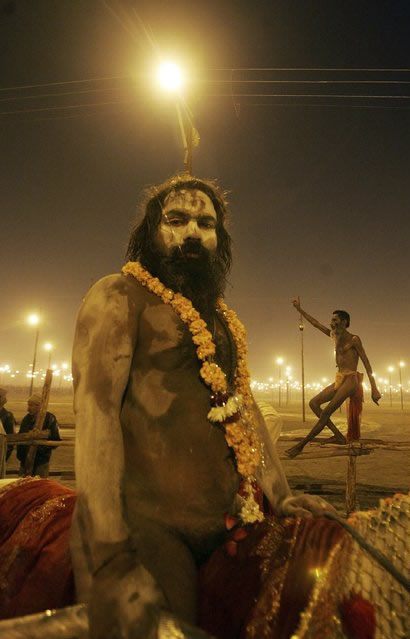


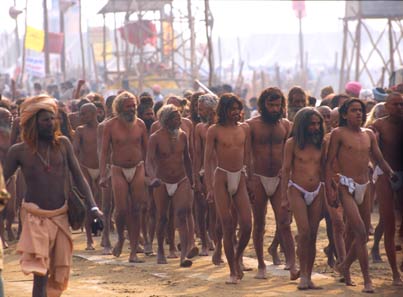


Nagas Sadhus (Baba)
Kumbh Mela +
kumbh mela 2013 +
Maha Kumbha 2013 +
Naga Sadhus
In Hinduism, sadhu ( “good man, holy man”) denotes an ascetic, wandering monk. Although the vast majority of sadhus are yogis, not all yogis are sadhus. The sadhu is solely dedicated to achieving moksa (liberation), the fourth and final asrama (stage of life), through meditation and contemplation of brahman. Sadhus often wear ochre-colored clothing, symbolizing their sanyasa (renunciation). This way of life is open to women; the female form of the word is sadhvi. Sadhus are sanyasi, or renunciation, who have left behind all material and sexual attachments and live in caves, forests and temples all over World.
Kumbh Mela or the Kumbh festival invites millions of tourist, pilgrims and foreign national to be the part of this glory of history that hindu religion has to offer human kind. However, not only kumbh festival the major crowd puller to this religious event are Sadhus and Naga baba. These naga baba attracts the attention of all due to their rare appearance and their extra ordinary rituals.
Travelers from round the globe drop in to be a part of Kumbh Mela or Kumbh festival inorder to have a glance of these Naga sadhus meditate and perform the weird religious and spiritual activities. Naga Sadhus belongs to different Akharas (which means camps) and each akharash have their own set of Naga Babas who are living this world in most unconventional way and follow their own set of religion and spiritual activities without caring about this world.
The identification feature of Naga Sadhus include being naked with long hairs knotted with different metals and body smeared with ashes. Not only this, one can see Naga Sadhus could be seen wearing beads of Rudraksha, believe to posses positive healing power according to Hindu mythology. Not just a few but you can witness Naga sadhus wearing thousand of Rudraksha beads and is believed that wearing Eleven thousand Rudrakhsa beads will help them attain the form of Lord Shankara or Lord Shiva.
Kumbh Mela or the Kumbh festival invites millions of tourist, pilgrims and foreign national to be the part of this glory of history that hindu religion has to offer human kind. However, not only kumbh festival the major crowd puller to this religious event are Sadhus and Naga baba. These naga baba attracts the attention of all due to their rare appearance and their extra ordinary rituals.
Travelers from round the globe drop in to be a part of Kumbh Mela or Kumbh festival inorder to have a glance of these Naga sadhus meditate and perform the weird religious and spiritual activities. Naga Sadhus belongs to different Akharas (which means camps) and each akharash have their own set of Naga Babas who are living this world in most unconventional way and follow their own set of religion and spiritual activities without caring about this world.
The identification feature of Naga Sadhus include being naked with long hairs knotted with different metals and body smeared with ashes. Not only this, one can see Naga Sadhus could be seen wearing beads of Rudraksha, believe to posses positive healing power according to Hindu mythology. Not just a few but you can witness Naga sadhus wearing thousand of Rudraksha beads and is believed that wearing Eleven thousand Rudrakhsa beads will help them attain the form of Lord Shankara or Lord Shiva.
Dashanami Sampradaya or Dasanami, literally Tradition of Ten Names (Dasa meaning ten and Naama meaning name in Sanskrit), is a Hindu monastic tradition of Ekadandis or wandering renunciates carrying a single staff or stick of knowledge, generally associated with the Advaita Vedanta tradition. It is supposed that they differ in their practices from the tridandi-sannyasis (who carry a triple staff) or Vaishnava sannyasis. The tridandi sanyasis keep the sacred thread on, upon accepting renunciation, while the Ekadandis often do not wear the sacred thread upon accepting renunciation.
The Ekadandi vedantins aim for moksha as the existence of the self in its natural condition indicated by the destruction of all its specific qualities. Any Hindu, irrespective of class, caste, age or gender can seek Sanyasa as an Ekadandi monk under the Dashanami tradition.
The Ekadandis or Dasanamis had established monasteries in India and Nepal in ancient unknown times [3]. After the decline of Buddhism, a section of the Ekadandis were organized by Adi Shankara in the 8th century in India to be associated with four mutts to provide a base for the growth of hinduism. However, the association of the dasanamis with the Shankara mutts remained a nominal one.
Ten Names (Dashanami)
Hindus who take up sanyasa in the Ekadandi tradition take up one of the ten names associated with this sampradaya.
1. Saraswati
2. Tirtha
3. Aranya
4. Bharati
5. Ashrama
6. Giri: The Kriya Yoga tradition comes under the Giri order.
7. Parvata
8. Sagara
9. Vana
10. Puri
- Saraswati, Puri and Bharati are associated with the Sringeri Sharada Peetham.
- Tirtha and Ashrama are associated with the Dwaraka Pitha.
- Giri, Parvata and Sagara are associated with Jyotirmath.
- Vana and Aranya are associated with the Govardhana matha at Puri.
However, it is to be noted that the association of the Ekadandis with the above mathas is only a nominal one. One of the reasons for the nominal affiliation is believed to stem from the understanding of varna Varna in Hinduism as supposedly fixed by birth by the Shankara mutts, while the Dasanamis continue to allow anyone seeking Sanyasam into their fold irrespective of caste or gender. An example, is the Kriya Yoga tradition that admits anyone irrespective of caste, creed, sex and religion.
Prominent Dashanamis
- Adi Shankaracharya
- Tulsidas
- Swami Dayanand Saraswati
- Swami Sahajanand Saraswati
- Agehananda Bharati
- Mahamandleshwar Shri Swami Vishveshwaranand Giri

Statue of Adi Shankara at his Samadhi Mandir in Kedarnath, India


Swamin Sahjanand Saraswat

Agehananda Bharati`s

Shri 1008 Mahamandleshwar Swami Vishveshwaranand Ji Maharaj

Bodhinatha Veylonswamiji with Swamiji (Left) at the Maryland Murugan Temple Nalur Festival
.jpg)
Satguru_Sivaya_Subramuniyaswami_(Gurudeva)

Swami Akhilesh (Karaganda, Kazakhstan)

Swami Satyananda Saraswati giving darshan

Vedic fire ritual - Yajna, with Swami Satyananda

Source:
Maha Kumbha 2013 : Dashanami Sampradaya
Kumbh Mela +
kumbh mela 2013 +
Kumbha +
Kumbha 2013 +
kumbha mela
Dashanami Sampradaya or Dasanami, literally Tradition of Ten Names (Dasa meaning ten and Naama meaning name in Sanskrit), is a Hindu monastic tradition of Ekadandis or wandering renunciates carrying a single staff or stick of knowledge, generally associated with the Advaita Vedanta tradition. It is supposed that they differ in their practices from the tridandi-sannyasis (who carry a triple staff) or Vaishnava sannyasis. The tridandi sanyasis keep the sacred thread on, upon accepting renunciation, while the Ekadandis often do not wear the sacred thread upon accepting renunciation.
The Ekadandi vedantins aim for moksha as the existence of the self in its natural condition indicated by the destruction of all its specific qualities. Any Hindu, irrespective of class, caste, age or gender can seek Sanyasa as an Ekadandi monk under the Dashanami tradition.
The Ekadandis or Dasanamis had established monasteries in India and Nepal in ancient unknown times [3]. After the decline of Buddhism, a section of the Ekadandis were organized by Adi Shankara in the 8th century in India to be associated with four mutts to provide a base for the growth of hinduism. However, the association of the dasanamis with the Shankara mutts remained a nominal one.
The Ekadandi vedantins aim for moksha as the existence of the self in its natural condition indicated by the destruction of all its specific qualities. Any Hindu, irrespective of class, caste, age or gender can seek Sanyasa as an Ekadandi monk under the Dashanami tradition.
The Ekadandis or Dasanamis had established monasteries in India and Nepal in ancient unknown times [3]. After the decline of Buddhism, a section of the Ekadandis were organized by Adi Shankara in the 8th century in India to be associated with four mutts to provide a base for the growth of hinduism. However, the association of the dasanamis with the Shankara mutts remained a nominal one.
Ten Names (Dashanami)
Hindus who take up sanyasa in the Ekadandi tradition take up one of the ten names associated with this sampradaya.
1. Saraswati
2. Tirtha
3. Aranya
4. Bharati
5. Ashrama
6. Giri: The Kriya Yoga tradition comes under the Giri order.
7. Parvata
8. Sagara
9. Vana
10. Puri
1. Saraswati
2. Tirtha
3. Aranya
4. Bharati
5. Ashrama
6. Giri: The Kriya Yoga tradition comes under the Giri order.
7. Parvata
8. Sagara
9. Vana
10. Puri
- Saraswati, Puri and Bharati are associated with the Sringeri Sharada Peetham.
- Tirtha and Ashrama are associated with the Dwaraka Pitha.
- Giri, Parvata and Sagara are associated with Jyotirmath.
- Vana and Aranya are associated with the Govardhana matha at Puri.
However, it is to be noted that the association of the Ekadandis with the above mathas is only a nominal one. One of the reasons for the nominal affiliation is believed to stem from the understanding of varna Varna in Hinduism as supposedly fixed by birth by the Shankara mutts, while the Dasanamis continue to allow anyone seeking Sanyasam into their fold irrespective of caste or gender. An example, is the Kriya Yoga tradition that admits anyone irrespective of caste, creed, sex and religion.
Prominent Dashanamis
- Adi Shankaracharya
- Tulsidas
- Swami Dayanand Saraswati
- Swami Sahajanand Saraswati
- Agehananda Bharati
- Mahamandleshwar Shri Swami Vishveshwaranand Giri
|
| Statue of Adi Shankara at his Samadhi Mandir in Kedarnath, India |
|
| Swamin Sahjanand Saraswat |
|
| Agehananda Bharati`s |
|
| Shri 1008 Mahamandleshwar Swami Vishveshwaranand Ji Maharaj |
|
| Bodhinatha Veylonswamiji with Swamiji (Left) at the Maryland Murugan Temple Nalur Festival |
|
| Satguru_Sivaya_Subramuniyaswami_(Gurudeva) |
|
| Swami Akhilesh (Karaganda, Kazakhstan) |
|
| Swami Satyananda Saraswati giving darshan |
|
| Vedic fire ritual - Yajna, with Swami Satyananda |
Source:
Shri Adi Shankaracharya or the first Shankara with his remarkable reinterpretations of Hindu scriptures, especially on Upanishads or Vedanta, had a profound influence on the growth of Hinduism at a time when chaos, superstition and bigotry was rampant. Shankara advocated the greatness of the Vedas and was the most famous Advaita philosopher who restored the Vedic Dharma and Advaita Vedanta to its pristine purity and glory.

Adi Shankaracharya's Dvaraka Pitha (Matha), Dwaraka, Gujarat, India

Adi Shankaracharya's Jyotirmath or Joshimath Matha, Chamoli (Badrinath), Uttarakhand, India

Adi Shankaracharya's Sringeri Sarada Pitham (Matha), Karnataka, India

Adi Shankaracharya's Govardhana Matha, Puri, Orissa, India
Shankaracharya's Monastic Centers
Shri Shankaracharya established four 'mutts' or monastic centers in four corners of India and put his four main disciples to head them and serve the spiritual needs of the ascetic community within the Vedantic tradition. He classified the wandering mendicants into 10 main groups to consolidate their spiritual strength.
Each mutt was assigned one Hinduism Veda. The mutts are Jyothir Mutt at Badrinath in northern India with Atharva Veda; Sarada Mutt at Sringeri in southern India with Yajur Veda; Govardhan Mutt at Jaganath Puri in eastern India with Rig Veda and Kalika Mutt at Dwarka in western India with Sama Veda.
It is believed that Shankara attained heavenly abode in Kedarnath and was only 32 years old when he died.
Direction
City
Branch of Veda
Acharya
Deity
Name of Peeta
East India
Puri, Orissa, India
Rigveda
Padmapaada
Vimala Devi
Shakti Peeta
South India
Shringeri, Karnataka, India,
Yajurveda
Sureshwara
Sharada Devi
Sharada Peeta
West India
Dwaraka, Gujarat,India
Samaveda
Hasthaamalaka
Mahakali Peeta
North India
Chamoli (Badarinath), Uttarakhand, India
Atharvanaveda
Thotaka
Aamurtha Peeta
Maha Kumbha 2013 : The Major Attraction of Mutts (Monastery)
Hindusim +
how to pray +
Kumbh Mela +
kumbh mela 2013 +
kumbha mela +
Maha Kumbh +
Maha Kumbh 2013 +
Maha Kumbh Mela 2013 +
matha +
Mathas +
monastery +
Mutts
Shri Adi Shankaracharya or the first Shankara with his remarkable reinterpretations of Hindu scriptures, especially on Upanishads or Vedanta, had a profound influence on the growth of Hinduism at a time when chaos, superstition and bigotry was rampant. Shankara advocated the greatness of the Vedas and was the most famous Advaita philosopher who restored the Vedic Dharma and Advaita Vedanta to its pristine purity and glory.
|
| Adi Shankaracharya's Dvaraka Pitha (Matha), Dwaraka, Gujarat, India |
|
| Adi Shankaracharya's Jyotirmath or Joshimath Matha, Chamoli (Badrinath), Uttarakhand, India |
|
| Adi Shankaracharya's Sringeri Sarada Pitham (Matha), Karnataka, India |
|
| Adi Shankaracharya's Govardhana Matha, Puri, Orissa, India |
Shankaracharya's Monastic Centers
Shri Shankaracharya established four 'mutts' or monastic centers in four corners of India and put his four main disciples to head them and serve the spiritual needs of the ascetic community within the Vedantic tradition. He classified the wandering mendicants into 10 main groups to consolidate their spiritual strength.
Each mutt was assigned one Hinduism Veda. The mutts are Jyothir Mutt at Badrinath in northern India with Atharva Veda; Sarada Mutt at Sringeri in southern India with Yajur Veda; Govardhan Mutt at Jaganath Puri in eastern India with Rig Veda and Kalika Mutt at Dwarka in western India with Sama Veda.
It is believed that Shankara attained heavenly abode in Kedarnath and was only 32 years old when he died.
| Direction | City | Branch of Veda | Acharya | Deity | Name of Peeta |
| East India | Puri, Orissa, India | Rigveda | Padmapaada | Vimala Devi | Shakti Peeta |
| South India | Shringeri, Karnataka, India, | Yajurveda | Sureshwara | Sharada Devi | Sharada Peeta |
| West India | Dwaraka, Gujarat,India | Samaveda | Hasthaamalaka | Mahakali Peeta | |
| North India | Chamoli (Badarinath), Uttarakhand, India | Atharvanaveda | Thotaka | Aamurtha Peeta |

From Mahabharat Jarasandha's Akhara is an ancient historical monument at Rajgir in Bihar, India
What is Akhada ?
The word “Akhada”, according to one historical version is originated from Sanskrit word “Akhanda” (constant / continuous / undivided). Its usage started from the need to maintain continuous vigil against the adversaries by the group / outfit of armed Sadhus and Sants specially established to protect their own faith and traditions. Small section / wing of the Akhada is called ANI or KHALSA.
Foreign aggressions as well as intra-sampraday differences caused growth of the Akhadas (6th century onwards). Over the years, these Akhadas have grown up into an institution like the Mutts and they are managed and run by the office-bearers like Shri Mahant, Mukhya Mahants, Sthaniya Mahant (Thanapati), Sachiv, Adhikari, Karbaris, Kothari, Pujari, etc. The members of the Akhadas practice ‘Bramhacharya’ and ‘Virakti’ and they propagate their faith to instill moral, cultural and spiritual values in the society.
The AKHADA is an armed outfit of the Sampradayas. Avahan Akhada was the first one to come into existence in 547 AD.
There are 14 Akhadas recognised by the Akhil Bhartiya Akhada Parishad. 13 of them participate in the Kumbha Melas (Prayag, Haridwar, Ujjain & Nashik).
Shaiva Sampraday 8 Akhadas
- AVAHAN
- ATAL
- ANAND
- NIRANJANI
- MAHA-NIRVANI
- AGNI
- JUNA
- GUDAD
Vaishnav Sampraday 3 Akhadas
- NIRMOHI
- DIGAMBAR
- NIRVANI
Udasin Sampraday 2 Akhadas
- BADA UDASIN
- NAYA UDASIN
Nirmal Sampraday 1 Akhada
- NIRMAL
(A) SHAIVA SAMPRADAY (SANYASI) : (8 Akhadas
1. SHRI AVAHAN AKHADA : Formed in 547 AD.
It has headquarters at Varanasi with branches at Haridwar, Prayag (Allahabad), Ujjain & Tryambakeshware. It has one Acharya Mahamandaleshwar as the head and number of Mahamandaleshwars and Mahants.
Prominent Mahants: Mahant Brijeshpuri
2. SHRI ATAL AKHADA @ SHRI SHAMBHU DASH-NAM ATAL AKHADA : Formed in 646 AD.
It has headquarters at Varanasi with branches at Prayag, Haridwar, Ujjains, Tryambakeshwar, Aaraj, Baroda, etc.
Prominent Mahants: Mahant Udaygiri, Mahant Purushottamgiri.
3. SHRI MAHA NIRVANI AKHADA @ SHRI PANCHAYATI AKHADA MAHA NIRVANI : Formed in 759 AD
It was formed following internal differences with Shri Atal Akhada. It has headquarters at Prayag and branches at Haridwar, Varanasi, Tryambakeshware, Omkareshwar, Chhanina Kheda (Udaipur, Rajasthan), Jwalamukhi (Dist. Kangda), etc.
Prominent Mahants: Mahant Chandrakantpuri.
4. SHRI ANAND AKHADA @ SHRI PANCHAYATI SHAMBHU DASH-NAM ANAND AKHADA : Formed in 856 AD.
It has headquarters at Varanasi and branches at Haridwar, Prayag, Ujjain, Tryambakeshwar etc.
Prominent Mahants: Mahant Sagaranand Saraswati.
5. SHRI NIRANJANI AKHADA @ SHRI SHAMBHU PANCH DASH-NAM NIRANJANI AKHADA : Formed in 904 AD
Formed in Mandvi (Gujarat), Hqrs at Haridwar, branches at Prayag, Varanasi, Ujjain, Tryambakeshwar, etc.
Prominent Mahants: Mahant Digambar Shankarji, Mahant Gopi Bharati
6. SHRI AGNI AKHADA @ SHRI PANCH AGNI AKHADA : Formed in 1136 AD
Has headquarters at Varanasi and branches at Haridwar, Prayag, Ujjain, Tryambakeshwar, Bareilly, Ahmedabad, Junagarh, etc. Also called as 'Brahmacharis' Akhada.
Prominent Mahants: Mahant Ambikanandji.
7. SHRI JUNA AKHADA @ BHAIRAV AKHADA @ SHRI SHAMBHU PANCH DASH-NAM JUNA AKHADA : Formed-1156 AD
Formed in Karnaprayag (Uttarakhand).
Prominent Mahants: Mahant Shantigiri (Thanapati), Mahant Premgiri (Sachiv).
8. SHRI GUDAD AKHADA : Formed in 12th Century
Has headquarters at Junagarh and branches at Haridwar, Bareilly, Omkareshwar, etc.
Not included in Akhada Parishad and has no traditional right for Royal-bath during Kumbha.
Prominent Mahants:
(B) UDASIN SECT : (2 Akhadas)
9. SHRI PANCHAYATI UDASIN BADA AKHADA : Formed in 1768 during Haridwar Kumbha
It is also called as Shri 108 Pujyapad Panchaparmeshar Panchayati Akhada Baba Udasin Nirvan.
It has headquarters at Prayag and branches at Haridwar, Ujjain, Gaya, Varanasi, Kurukshetra, Patiala, Hyderabad, Guntur, ShivaKashi, Tryambakeshwar, Hilsa (Nalanda), Kaharpur (Hoshyarpur, Punjab), Bhootnath-Samdiyala (Gujarat), etc.
Prominent Mahants: Mahant Shivgiriji.
10. SHRI PANCHAYATI UDASIN NAYA AKHADA: Formed in 1846 after a dispute in Bada Udasin Akhada
Has headquarters at Haridwar and branches at Prayag, Kurukshetra, Tryambakeshwar, etc.
Prominent Mahants: Mahant Vichardas, Mahant Govinddas.
(C) NIRMAL SECT
11. SHRI PANCHAYATI NIRMAL AKHADA: Formed in 1856 in Punjab
Has headquarters at Haridwar and branches at Prayag, Ujjain, Tryambakeshwar, Nashik, etc. Has close ties with Sikhism. Believes in Guru Granth Saheb and follows a Shaiva and Vedic upasana tradition. Guru Gobind Singh had sent a batch of 5 saffron robe sants (Panch Nirmal Gaurik) (Gaurik i.e. Saffron colour) to learn Vedas, Vedang, Dharma-shastra, etc. at Varanasi. However after learning, these Sants had formed their own sect by name Nirmal Sampraday.
Prominent Mahants: Mahant Tirthraj Singh.
(D) VAISHNAVA SECT (BAIRAGI): ( 3 Akhadas)
3 Akhadas and 18 Anis were formed in 1475 at Vrindavan by uniting 4 Sampradayas and Mandals / Sanghs of the Vaishnavas.
12. SHRI PANCH RAMANANDIYA NIRMOHI AKHADA :
It comprises following 9 ANIS (Khalsas) with Yellow Flag :
- Shri Ramanandiya Nirmohi
- Shri Ramanandiya Zadiya Nirmohi
- Shri Ramanandiya Maladhari Nirmohi
- Shri Ramanandiva Maha-Nirvani Nirmohi
- Shri Ramanandiya Santoshi Nirmohi
- Shri Radhavallabhi Nirmohi
- Shri Harivyasi Santoshi
- Shri Harivyasi Maha Nirvani
- Dadu Panthi
Prominent Mahants: Mahant Ramdasji ,Mahant Rajendradas (both Nirmohi), Mahant Jagannathdas (Khaki Akhada), Mahant Narsimhadas (Khaki Akhada), Mahant Krishnacharandas (Chatur- Sampradaya).
13. SHRI PANCH RAMANANDIYA DIGAMBAR AKHADA
It has following 2 ANIs with Five Colour Flag viz. i) Shri Ramji Digambar and ii) Shri Shyamji Digambar.
Prominent Mahants: Mahant Keshavdas, Mahant Ramkishoredas.
14.SHRI PANCH RAMANANDIYA NIRVANI AKHADA
It has following 7 ANIS.
- Shri Ramanandiya Nirvani
- Shri Ramanandiaya Khaki
- Shri Ramanadiya Niralambi
- Shri Ramanadiya Tatambari
- Shri Harivyasi Nirvani
- Harivyasi Khaki
- Balbhadri
Prominent Mahants: Mahant Gyandasji Maharaj, Mahant Shivanandji, Mahant Ramashraydasji, Mahant Sanjaydas.
Maha Kumbha 2013 : History of Akhada
akhara +
how to pray +
Kumbh Mela +
kumbh mela 2013 +
kumbha mela +
Maha Kumbh +
Maha Kumbh 2013 +
Maha Kumbh Mela 2013 +
Maha Kumbha 2013 +
mela kumbh +
wrestling arena +
wrestling videos
|
| From Mahabharat Jarasandha's Akhara is an ancient historical monument at Rajgir in Bihar, India |
What is Akhada ?
The word “Akhada”, according to one historical version is originated from Sanskrit word “Akhanda” (constant / continuous / undivided). Its usage started from the need to maintain continuous vigil against the adversaries by the group / outfit of armed Sadhus and Sants specially established to protect their own faith and traditions. Small section / wing of the Akhada is called ANI or KHALSA.
Foreign aggressions as well as intra-sampraday differences caused growth of the Akhadas (6th century onwards). Over the years, these Akhadas have grown up into an institution like the Mutts and they are managed and run by the office-bearers like Shri Mahant, Mukhya Mahants, Sthaniya Mahant (Thanapati), Sachiv, Adhikari, Karbaris, Kothari, Pujari, etc. The members of the Akhadas practice ‘Bramhacharya’ and ‘Virakti’ and they propagate their faith to instill moral, cultural and spiritual values in the society.
The AKHADA is an armed outfit of the Sampradayas. Avahan Akhada was the first one to come into existence in 547 AD.
There are 14 Akhadas recognised by the Akhil Bhartiya Akhada Parishad. 13 of them participate in the Kumbha Melas (Prayag, Haridwar, Ujjain & Nashik).
Shaiva Sampraday 8 Akhadas
- AVAHAN
- ATAL
- ANAND
- NIRANJANI
- MAHA-NIRVANI
- AGNI
- JUNA
- GUDAD
- NIRMOHI
- DIGAMBAR
- NIRVANI
- BADA UDASIN
- NAYA UDASIN
- NIRMAL
(A) SHAIVA SAMPRADAY (SANYASI) : (8 Akhadas
1. SHRI AVAHAN AKHADA : Formed in 547 AD.
It has headquarters at Varanasi with branches at Haridwar, Prayag (Allahabad), Ujjain & Tryambakeshware. It has one Acharya Mahamandaleshwar as the head and number of Mahamandaleshwars and Mahants.
Prominent Mahants: Mahant Brijeshpuri
2. SHRI ATAL AKHADA @ SHRI SHAMBHU DASH-NAM ATAL AKHADA : Formed in 646 AD.
It has headquarters at Varanasi with branches at Prayag, Haridwar, Ujjains, Tryambakeshwar, Aaraj, Baroda, etc.
Prominent Mahants: Mahant Udaygiri, Mahant Purushottamgiri.
3. SHRI MAHA NIRVANI AKHADA @ SHRI PANCHAYATI AKHADA MAHA NIRVANI : Formed in 759 AD
It was formed following internal differences with Shri Atal Akhada. It has headquarters at Prayag and branches at Haridwar, Varanasi, Tryambakeshware, Omkareshwar, Chhanina Kheda (Udaipur, Rajasthan), Jwalamukhi (Dist. Kangda), etc.
Prominent Mahants: Mahant Chandrakantpuri.
4. SHRI ANAND AKHADA @ SHRI PANCHAYATI SHAMBHU DASH-NAM ANAND AKHADA : Formed in 856 AD.
It has headquarters at Varanasi and branches at Haridwar, Prayag, Ujjain, Tryambakeshwar etc.
Prominent Mahants: Mahant Sagaranand Saraswati.
5. SHRI NIRANJANI AKHADA @ SHRI SHAMBHU PANCH DASH-NAM NIRANJANI AKHADA : Formed in 904 AD
Formed in Mandvi (Gujarat), Hqrs at Haridwar, branches at Prayag, Varanasi, Ujjain, Tryambakeshwar, etc.
Prominent Mahants: Mahant Digambar Shankarji, Mahant Gopi Bharati
6. SHRI AGNI AKHADA @ SHRI PANCH AGNI AKHADA : Formed in 1136 AD
Has headquarters at Varanasi and branches at Haridwar, Prayag, Ujjain, Tryambakeshwar, Bareilly, Ahmedabad, Junagarh, etc. Also called as 'Brahmacharis' Akhada.
Prominent Mahants: Mahant Ambikanandji.
7. SHRI JUNA AKHADA @ BHAIRAV AKHADA @ SHRI SHAMBHU PANCH DASH-NAM JUNA AKHADA : Formed-1156 AD
Formed in Karnaprayag (Uttarakhand).
Prominent Mahants: Mahant Shantigiri (Thanapati), Mahant Premgiri (Sachiv).
8. SHRI GUDAD AKHADA : Formed in 12th Century
Has headquarters at Junagarh and branches at Haridwar, Bareilly, Omkareshwar, etc.
Not included in Akhada Parishad and has no traditional right for Royal-bath during Kumbha.
Prominent Mahants:
(B) UDASIN SECT : (2 Akhadas)
9. SHRI PANCHAYATI UDASIN BADA AKHADA : Formed in 1768 during Haridwar Kumbha
It is also called as Shri 108 Pujyapad Panchaparmeshar Panchayati Akhada Baba Udasin Nirvan.
It has headquarters at Prayag and branches at Haridwar, Ujjain, Gaya, Varanasi, Kurukshetra, Patiala, Hyderabad, Guntur, ShivaKashi, Tryambakeshwar, Hilsa (Nalanda), Kaharpur (Hoshyarpur, Punjab), Bhootnath-Samdiyala (Gujarat), etc.
Prominent Mahants: Mahant Shivgiriji.
10. SHRI PANCHAYATI UDASIN NAYA AKHADA: Formed in 1846 after a dispute in Bada Udasin Akhada
Has headquarters at Haridwar and branches at Prayag, Kurukshetra, Tryambakeshwar, etc.
Prominent Mahants: Mahant Vichardas, Mahant Govinddas.
(C) NIRMAL SECT
11. SHRI PANCHAYATI NIRMAL AKHADA: Formed in 1856 in Punjab
Has headquarters at Haridwar and branches at Prayag, Ujjain, Tryambakeshwar, Nashik, etc. Has close ties with Sikhism. Believes in Guru Granth Saheb and follows a Shaiva and Vedic upasana tradition. Guru Gobind Singh had sent a batch of 5 saffron robe sants (Panch Nirmal Gaurik) (Gaurik i.e. Saffron colour) to learn Vedas, Vedang, Dharma-shastra, etc. at Varanasi. However after learning, these Sants had formed their own sect by name Nirmal Sampraday.
Prominent Mahants: Mahant Tirthraj Singh.
(D) VAISHNAVA SECT (BAIRAGI): ( 3 Akhadas)
3 Akhadas and 18 Anis were formed in 1475 at Vrindavan by uniting 4 Sampradayas and Mandals / Sanghs of the Vaishnavas.
12. SHRI PANCH RAMANANDIYA NIRMOHI AKHADA :
It comprises following 9 ANIS (Khalsas) with Yellow Flag :
- Shri Ramanandiya Nirmohi
- Shri Ramanandiya Zadiya Nirmohi
- Shri Ramanandiya Maladhari Nirmohi
- Shri Ramanandiva Maha-Nirvani Nirmohi
- Shri Ramanandiya Santoshi Nirmohi
- Shri Radhavallabhi Nirmohi
- Shri Harivyasi Santoshi
- Shri Harivyasi Maha Nirvani
- Dadu Panthi
13. SHRI PANCH RAMANANDIYA DIGAMBAR AKHADA
It has following 2 ANIs with Five Colour Flag viz. i) Shri Ramji Digambar and ii) Shri Shyamji Digambar.
Prominent Mahants: Mahant Keshavdas, Mahant Ramkishoredas.
14.SHRI PANCH RAMANANDIYA NIRVANI AKHADA
It has following 7 ANIS.
- Shri Ramanandiya Nirvani
- Shri Ramanandiaya Khaki
- Shri Ramanadiya Niralambi
- Shri Ramanadiya Tatambari
- Shri Harivyasi Nirvani
- Harivyasi Khaki
- Balbhadri


SHRI PANCH RAMANANDIYA NIRVANI AKHADA It has following 7 ANIS.
- Shri Ramanandiya Nirvani
- Shri Ramanandiaya Khaki
- Shri Ramanadiya Niralambi
- Shri Ramanadiya Tatambari
- Shri Harivyasi Nirvani
- Harivyasi Khaki
- Balbhadri
Prominent Mahants: Mahant Gyandasji Maharaj, Mahant Shivanandji, Mahant Ramashraydasji, Mahant Sanjaydas.
Maha Kumbha 2013 : SHRI PANCH RAMANANDIYA NIRVANI AKHADA
akhara +
how to pray +
Kumbh Mela +
kumbh mela 2013 +
kumbha mela +
Maha Kumbh +
Maha Kumbh 2013 +
Maha Kumbh Mela 2013 +
Maha Kumbha 2013 +
mela kumbh +
wrestling arena +
wrestling videos
SHRI PANCH RAMANANDIYA NIRVANI AKHADA It has following 7 ANIS.
- Shri Ramanandiya Nirvani
- Shri Ramanandiaya Khaki
- Shri Ramanadiya Niralambi
- Shri Ramanadiya Tatambari
- Shri Harivyasi Nirvani
- Harivyasi Khaki
- Balbhadri
Prominent Mahants: Mahant Gyandasji Maharaj, Mahant Shivanandji, Mahant Ramashraydasji, Mahant Sanjaydas.


